Blending with Interactivity
Reimagining the Makeup Try-On Experience
5 Minute Read
ROLE
UX Researcher
3D Experiential Designer
AR Experience Designer
TIMELINE
2025 (Feb - Apr)
SKILLS
UI Design
Material Experimentation
Visual Storytelling
3D Modeling
Introduction
This capstone project explored how beauty brands like Glossier can improve the in-store shopping experience through accessible, inclusive, and engaging alternatives to traditional product testers. The goal was to design a hybrid experience—combining augmented reality with tactile tools—to empower users to explore and test makeup more confidently and playfully.
Tools Used: Figma, Nomad Sculpt, Tinkercad, Adobe Aero, Transparent Media
The Problem.ᐟ
In-store testers are often unhygienic, inaccessible, and frustrating to use. Virtual solutions from leading brands lack accuracy, emotional appeal, and customization, failing to fully capture the nuance and joy of makeup.
How might we challenge conventional methods of testing (and not testing) makeup to create a hybrid experience that prioritizes:
Accuracy – in color matching and skin tone detection
Emotional connection – evoking the joy and creativity of real-life application
Accessibility – enabling all users to confidently explore products, regardless of ability or background
Artifact 1 • AR Kiosk UI Design
Catalog Walkthrough
Feature Highlights:
• Try-On Catalog
Users can browse the kiosk’s lens-based try-on catalog by product type or shade, enabling quick, personalized exploration of available looks.
AR UI Walkthrough Pt. 1
Feature Highlights:
• Filterable Community Reviews
Products feature a review hub where users can filter reviews by skin tone and skin type, helping others find relatable feedback and gauge results more reliably.
AR UI Walkthrough Pt. 2
Feature Highlights:
• Customizable Application Modes
Users can select different application modes—e.g., lipstick, blush, eyeshadow—with adjustable opacity, layering, and blend styles to replicate realistic makeup techniques.
• Manual Layering Mode with AR-Adaptive Mapping
Users can color directly onto their face using a palette of textures and tones—with AR-assisted alignment that adapts the design to their individual bone structure and facial zones.
Product Concept
This project explores the design of an Augmented Reality (AR) Kiosk for makeup retail environments, aimed at enhancing the current virtual try-on solutions offered by brands like Sephora, L’Oréal, and Glossier.
While AR try-ons are becoming more common, they often lack realism, personalization, and user control. My goal was to push beyond existing limitations by designing an experience that offers essential, user-centered features that current systems overlook—such as customizable layering, bone-structure-aware application, and inclusive shade matching.
By rethinking the way users interact with AR in-store, the kiosk concept focuses on:
Accurate, expressive try-ons that reflect how makeup is actually applied
Interactive features that support creativity and individual facial structure
A fun, informative interface that improves user trust and engagement
The Research
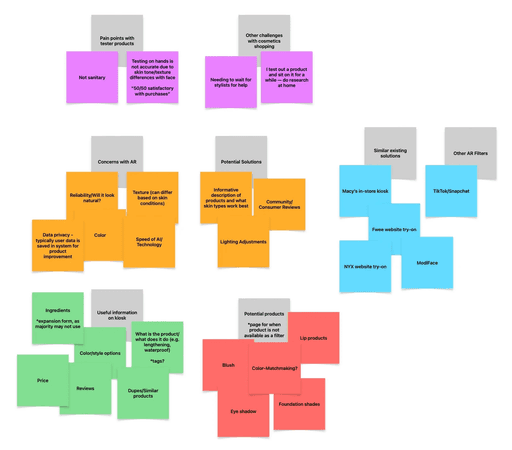
Cosmetic Retail Customer Journey Map:
Affinity Mapping - through user interviews to identify pain points and identified opportunity areas:
Artifact 2 • Swatch Cards
Product Concept
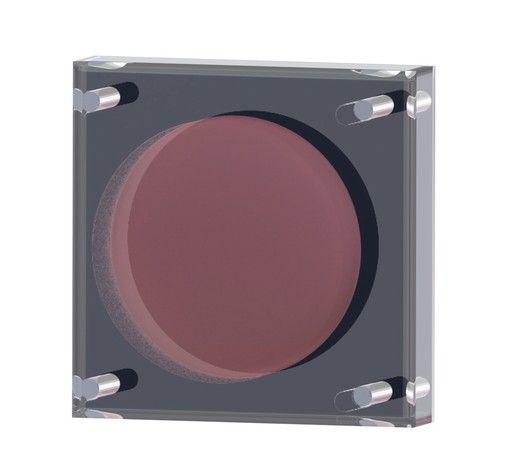
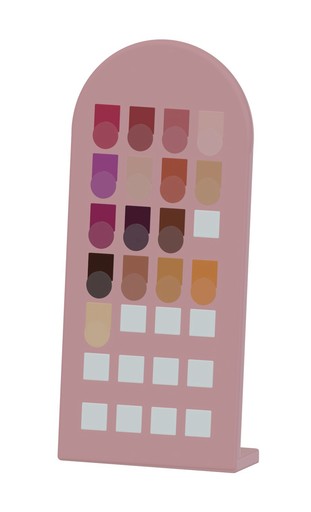
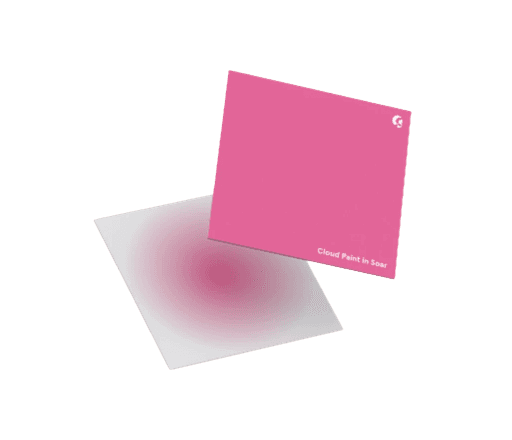
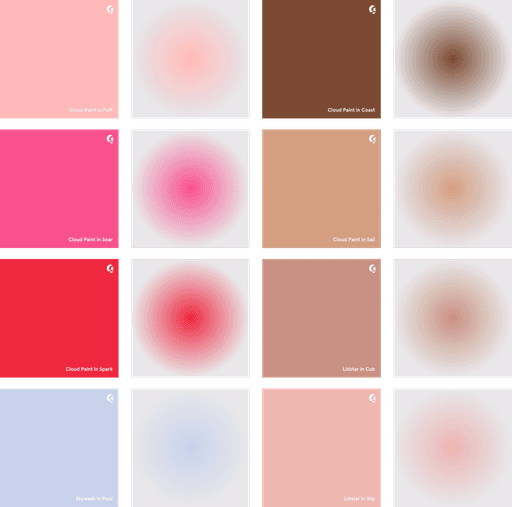
The Gradient Swatch Cards are a physical tool designed to complement digital AR try-ons by providing a tactile, accurate, and intuitive way for users to match makeup shades directly on their skin.
Inspired by the limitations of traditional testers—messy, unhygienic, or poorly maintained—the swatch cards offer a hands-on, low-commitment alternative that enhances the in-store experience. Each card features a smooth gradient of pigment (e.g., blush, lipstick, highlighter tones) printed on transparent or semi-transparent material, allowing users to overlay it directly onto their skin to assess color compatibility in different lighting conditions.
The concept emphasizes:
Real-world feedback for undertone matching and finish visualization
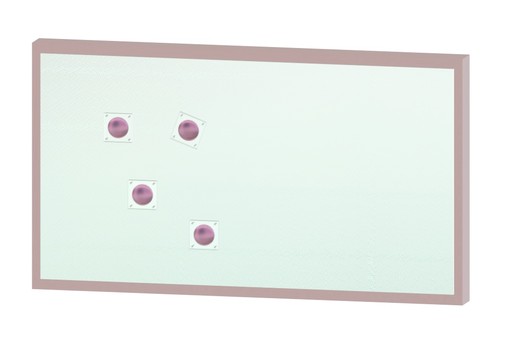
Modular, magnetic designs that encourage exploration and play
Hygienic, reusable materials that align with retail sustainability goals
By bridging the gap between physical and digital try-on experiences, the swatch cards support a more inclusive, accurate, and engaging makeup selection process.
Initial Vision
Process
To prototype the Gradient Swatch Cards, I experimented with vellum and transparent printing paper to achieve a semi-translucent surface that would allow users to overlay gradients directly on their skin.
Vellum offered a soft, frosted look but absorbed ink unevenly, dulling the gradients.
Transparent film preserved clarity but caused repeated printer malfunctions, making it impractical.
These trials revealed key challenges with material compatibility and print quality, ultimately leading me to pivot toward more durable, modular designs with magnetic backing for cheek, lip, and eye application.
Physical Prototype
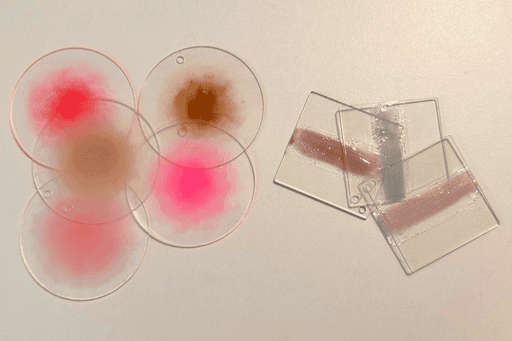
Sample swatch cards
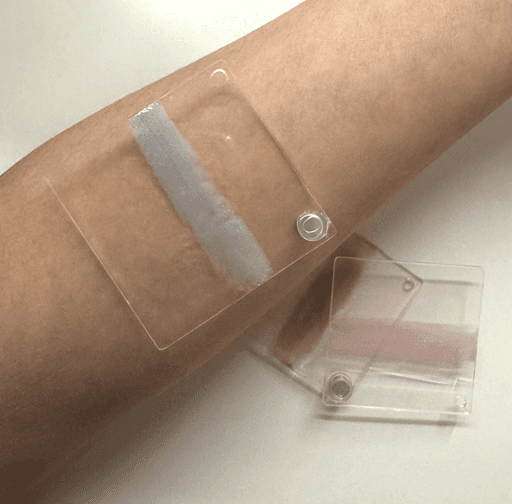
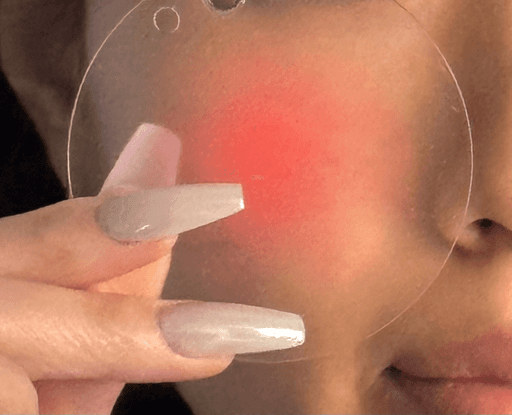
Eye shadow swatch
Blush swatch
Artifact 3 • 3D Experiential In-Store Display
Product Concept
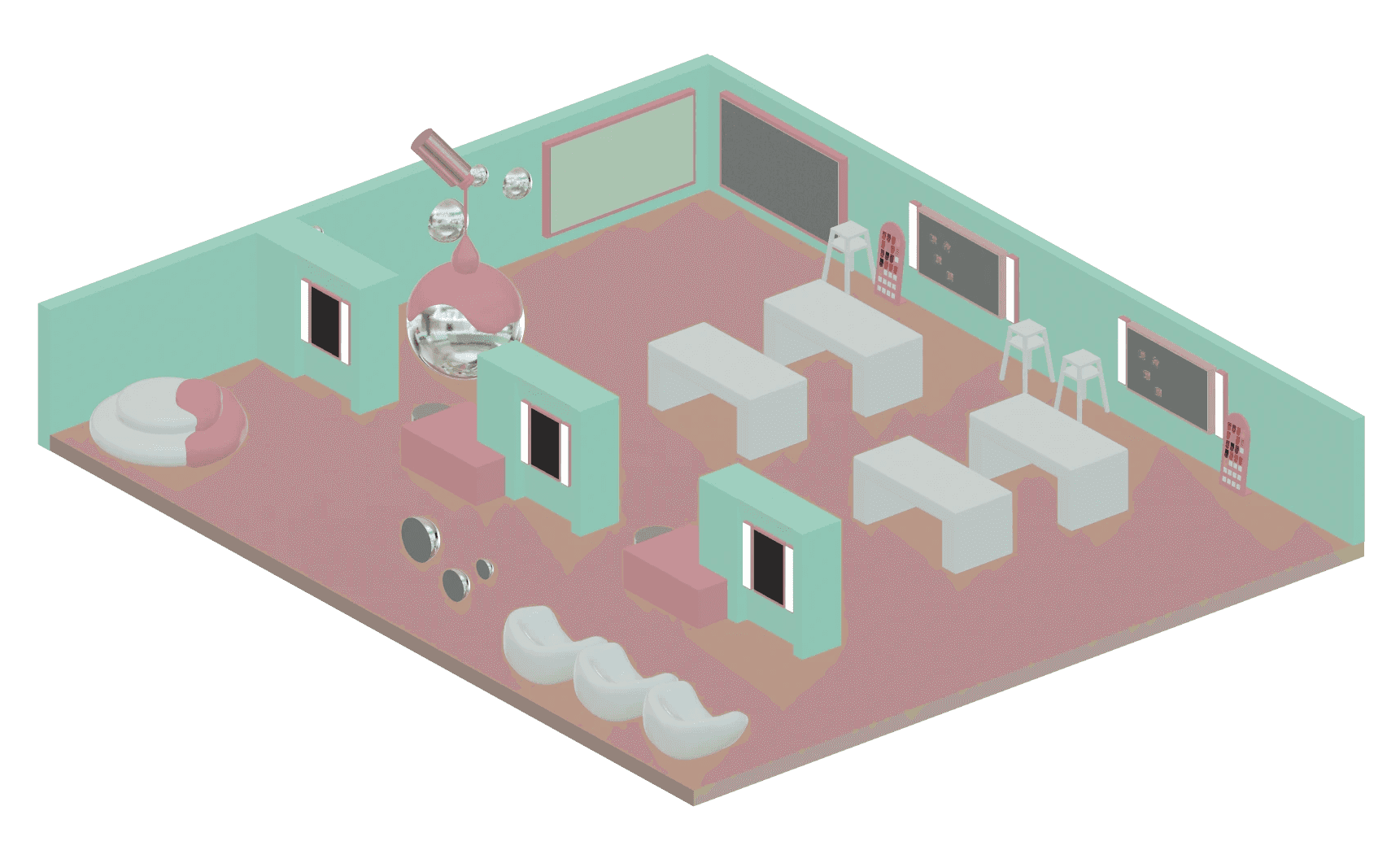
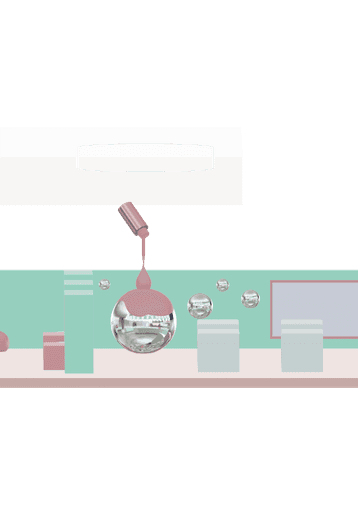
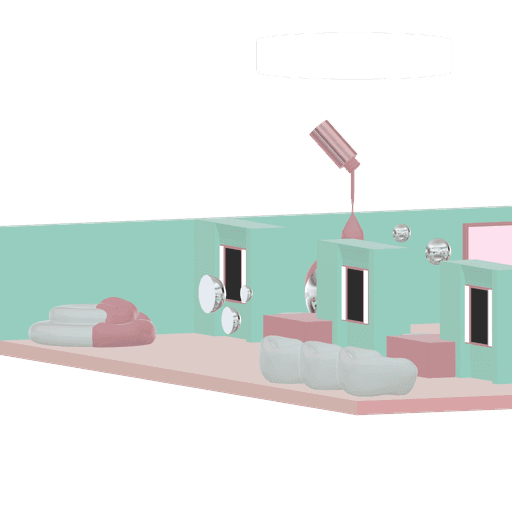
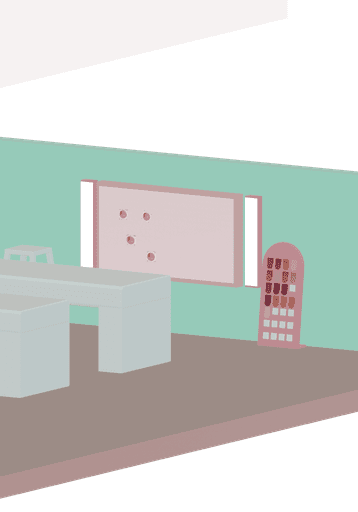
The 3D Experiential In-Store Display is a conceptual spatial design that visualizes how the AR kiosk and physical swatch cards could be integrated into a real retail environment, such as a Glossier store. This sculptural setup maps the customer journey from discovery to decision-making, supporting an intuitive flow between digital experimentation and tactile interaction.
Built using Nomad Sculpt, the display illustrates:
A central AR kiosk station where users can explore looks, layer products, and receive personalized recommendations
Magnetic swatch card panels placed alongside mirrors, encouraging physical engagement and real-time shade testing
A cohesive, brand-aligned layout that feels playful, modern, and accessible—aligned with Glossier’s minimalist aesthetic
The display is designed not just as a functional layout, but as a deliberate experience, inviting users to move fluidly between trying, adjusting, and purchasing. It highlights how immersive technology and physical tools can coexist to create a more engaging, inclusive, and delightful retail experience.
✦ Design Note: The space is conceptualized as a “Glossier Lab”—a clean, playful environment where users experiment like scientists to discover their perfect shades. The mood blends minimalism with curiosity, encouraging hands-on exploration and personalized beauty as a form of self-expression.
Initial Vision

Process
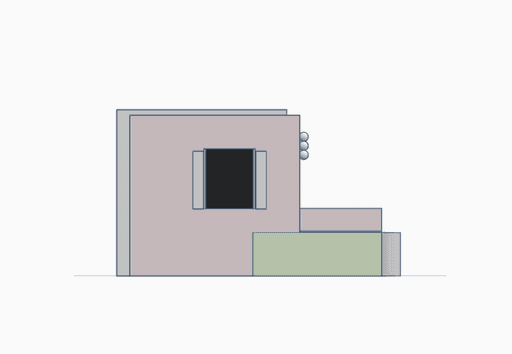
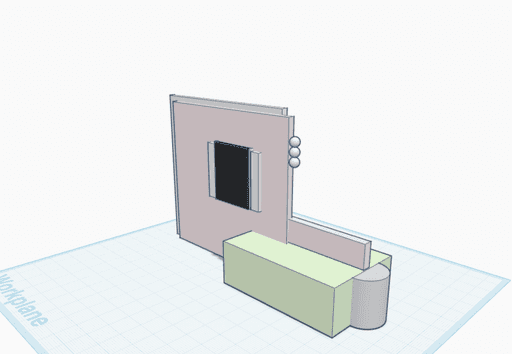
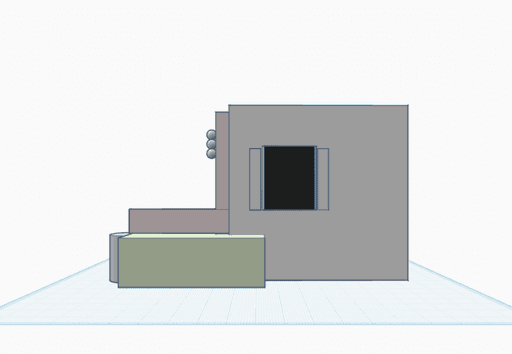
Initial mockup, visualizing kiosk set up:
Outcomes & Takeaways
Learned to prototype hybrid digital/physical experiences grounded in brand and user insight
Gained experience in spatial design, UX/UI prototyping, and AR feasibility exploration
Discovered a new interest in 3D modeling and immersive interaction
Understood the value of scope pivoting and designing for realistic impact
Designed with 🪄⋆。 °✩ and 🍵 by Iris.